

The 21st century is witnessing a surge in the popularity of the Northern Sea Route (NSR) as a new maritime corridor for global trade
Abstract
Russia remains the dominant Arctic power, with approximately 24,000 km of coastline stretching across the region. However, the war in Ukraine, tensions between Moscow and the West, and environmental constraints have slowed the adoption of the NSR as a viable alternative to the traditional Suez Canal Route. Despite geopolitical and environmental challenges, Russia and China continue to develop infrastructural projects in the Arctic alongside new agreements, recognizing the potential strategic and economic importance of the NSR.
Introduction
The Arctic ice is melting at an unprecedented pace. According to recent scientific studies, the Arctic Ocean could become nearly ice-free during summer by 2040, while year-round navigation may become feasible closer to the end of the century. Currently, the NSR is primarily navigable during the summer-autumn season, typically from July to November, while navigation during other periods remains dependent on icebreaker assistance. This environmental transformation is creating new opportunities for international maritime trade alongside serious environmental concerns.
Among the Arctic states, Russia is the country best positioned to benefit from this major game changer due to its extensive northern coastline and strategic geographic position. Since the beginning of Vladimir Putin’s presidency, Moscow has increasingly invested in the development of the Northern Sea Route (NSR) through major infrastructure and energy projects, positioning the Arctic as a key strategic national interest. These investments include the expansion of nuclear-powered icebreaker fleets, the construction of new ports, the development of LNG projects such as Yamal LNG and Arctic LNG 2, as well as other infrastructural developments. At the same time, Russia has emphasized the preservation of the Arctic environment, considered “an absolute priority,” alongside the strengthening of strategic cooperation with China.

In fact, Beijing has demonstrated growing interest in the Arctic route through the announcement of the “Polar Silk Road” in 2018, viewing the NSR as a strategic corridor capable of significantly reducing shipping times between Asia and Europe.
The route has gained further relevance amid disruptions in traditional maritime corridors and increasing instability in key global chokepoints. As Vladimir Putin recently stated: “The importance of the northern trans-Arctic route, as the safest, most reliable and efficient route, is becoming increasingly obvious amid disruptions in global transport chains.”
On the other hand, Western shipping companies remain reluctant to cooperate or engage in strategic discussions with Moscow regarding the commercialization of the NSR, by mentioning environmental concerns. Statements such as those from major maritime actors, including the MSC’s declaration that it will not use the NSR, reflect this caution. MSC is joined by other major Western carriers and companies, including CMA CGM, Maersk, Evergreen, Nike, DHL and Inditex in signing the Ocean Conservancy’s Arctic Corporate Shipping Pledge, which warns that increased vessel traffic poses “great risk and potentially devastating environmental impacts.”
In addition, the Arctic Council largely suspended its diplomatic cooperation following Russia’s invasion of Ukraine in 2022. As a result, Russia’s position in the High North is currently viewed with concern by Western countries, given the potential geopolitical and economic advantage associated with the NSR, which could generate up to $160 billion in tax revenues for Moscow by 2035.
Corpus
The Northern Sea Route (NSR) is 30-40% shorter, with an approximate length of 13,000 km, compared to the Southern Route, which is about 21,000 km, depending on the specific Asian and European ports considered. Therefore, the potential savings in both time and costs appear significantly greater.

The Chinese Haijie Shipping Company announced its “Arctic Express” service, planning to conduct trade through the NSR with a transit time of around 18 days, compared to 30-50 days via traditional routes such as the Suez Canal.
Image source: https://www.dw.com/en/why-russias-northern-sea-route-is-a-risk-for-global-trade/a-76987400
Additionally, there are no major chokepoints along the NSR, whereas the traditional maritime route from Asia to Europe includes several critical passages, such as the Strait of Hormuz, the Bab el-Mandeb Strait, the Suez Canal, the Strait of Gibraltar, and the Strait of Malacca. The latter is often associated with the “Malacca Dilemma,” a concept that highlights how vital this passage is for the Chinese economy in the absence of viable alternatives, representing approximately 60% of China’s trade flows and around 20% of global trade.
Understanding the strategic importance of these passages is essential to appreciate the value of another route such as the NSR during both current and future periods of geopolitical instability. These critical chokepoints can become targets for economic or political objectives pursued by both state and non-state actors, as demonstrated in recent years, while even accidental incidentscould disrupt the entire global maritime trade system.
Russia and China, recently joined by India following the formalization of an Arctic partnership with Moscow in December 2025, appear to be among the few nations adopting a long-term strategic vision, strengthening their presence in the Arctic and expanding joint projects and plans related to the region.

It is difficult to imagine the future of global trade without considering the Arctic route as a major strategic component of future global trade. As the ice continues to melt, combined with 21st-century technological advancements in infrastructure and shipbuilding projects, conditions increasingly favor the broader use of Arctic maritime routes.
However, the constraints of the NSR remain multiple, particularly for countries hostile to Russia. Moscow requires foreign vessels to obtain a specific permit to pass through the NSR. Moreover, for at least the next few decades, navigation along the route will not be feasible without nuclear-powered icebreakers escorting commercial ships.
Russia currently possesses the world’s largest fleet of such vessels, while China is also developing its own capabilities. The possession of icebreakers is another key factor explaining the skepticism and difficulties Western countries and companies face in considering the NSR a fully viable alternative for maritime trade at present.

Image source: https://rosatom.ru/en/rosatom-group/the-nuclear-icebreaker-fleet/
Another major constraint is the environmental sensitivity of the Arctic region and the severe effects of climate change it is currently facing, which Western actors often cite in their opposition to the NSR. In this regard, the International Maritime Organization (IMO) has banned the use and carriage of heavy fuel oil (HFO) in Arctic waters starting from 2024. However, Russia granted a waiver exemption allowing its continued use until 2029.
Despite international skepticism, Russia is investing heavily in the High North and cooperating closely with China, with both countries viewing the Arctic as both a present and future alternative for global maritime trade. Moreover, several other countries, particularly in Asia such as India and South Korea, are increasingly showing interest in trading through the northern corridor.
Speculative Hypothesis
Given the prospective strategic advantages that the Arctic route could grant Russia, European countries and the United States are reluctant to participate in the commercialization of the NSR.
Beyond the navigational benefits, the High North is also rich in rare earth elements, as evidenced by the Tomtorskoye deposit in Yakutia. Russia is developing its technological and infrastructural capabilities alongside its natural advantages in order to make the NSR increasingly viable and the Arctic more exploitable.
In contrast, for Western countries, beyond environmental concerns, which are scientifically grounded, there are also important political and economic considerations. The viability of the Arctic route could be significantly facilitated if all actors engaged in the creation of a sustainable and comprehensive framework. With 21st-century technologies and environmentally friendly projects, this would be achievable if there were genuine willingness to cooperate constructively, aligned with Moscow’s stated commitment to do so.
However, reliance on Russia’s icebreakers and authorization remains both economically costly and geopolitically sensitive, particularly given the perceived strategic advantage Moscow could gain if the commercialization of the Northern Sea Route (NSR) continues to expand.

So What
The Russia-China relationship has reached “the highest level in history,” Xi stated during Vladimir Putin’s recent visit to Beijing on May 19-20, during which the two presidents signed 40 cooperation agreements, as well as a declaration on a multipolar world order.
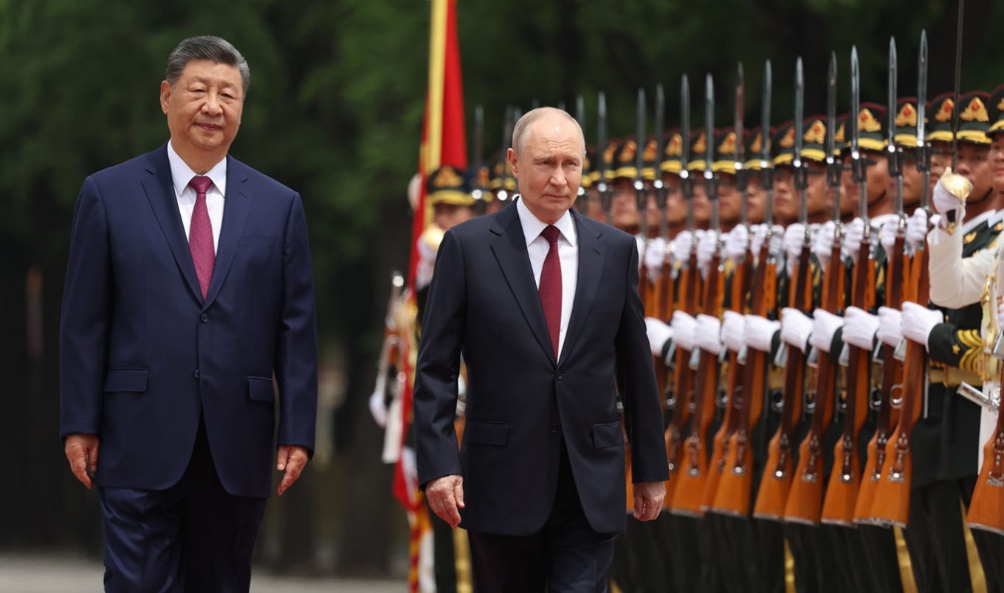
Image source: https://thediplomat.com/2026/05/the-putin-xi-meeting-made-the-trump-xi-summit-look-hollow/
One of the key discussions concerned the 2,600-kilometer Power of Siberia 2 pipeline, capable of transporting 50 billion cubic metres of gas per year, connecting the Yamal gas fields in the Arctic with China. In this regard, a memorandum of understanding was signed, with commitments to further advance its development.
Kremlin spokesman Dmitry Peskov said that “Progress has been made. Indeed, an understanding has been reached on many key aspects of Power of Siberia 2. Progress can and should be stated, but we have yet to finalize this agreement.” Therefore, it is likely only a matter of time before the new pipeline becomes a reality, emerging in the coming years as one of the many Sino-Russian projects related to the Arctic.

Moscow appears largely unconcerned about Western skepticism regarding the NSR. The major projects and continuous investments in the High North by Russia and China are likely to create a significant strategic advantage for both countries and their partners, enabling them smoother access through the route and offering an alternative to traditional, longer, and geopolitically riskier maritime passages.
Best-case scenario
The best-case scenario would be that, once the Russo-Ukrainian war comes to an end and tensions between the West and Russia begin to ease, although current developments suggest the opposite, with increasing military activity further inflaming the conflict, the NSR would receive greater international attention and concrete navigation plans also from European countries, potentially becoming one of the world’s main maritime trade routes, given the time and cost advantages of its navigation.
This development should be accompanied by decisive and cooperative efforts to preserve the Arctic environment, including compliance with International Maritime Organization regulations and bans, as well as the development of cleaner fuels and sustainable technologies for ships operating in these sensitive waters. Russia also appears to support and promote this commitment, as it has identified the preservation of the Arctic as an absolute priority.

Worst-case scenario
Considering the potential escalation of the war between Russia and Ukraine, recent developments suggest that the conflict may continue and intensify further. Following Moscow’s massive attack on Kyiv on May 24 and the prospect of further strikes on the capital, tensions remain extremely high. The attack was reportedly launched in response to a Ukrainian drone strike on a student dormitory in Luhansk that killed 21 young students, alongside continued Ukrainian attacks on Russian territory targeting civilian areas.
As a consequence, the Arctic and the NSR may fail to receive sufficient international support and political legitimacy, particularly from European countries and Western actors. This could slow down the adoption and international commercialization of the NSR, further hindered by sanctions on Russia, ongoing geopolitical instability, and stringent environmental regulations.
Conclusion
Russia’s investments and strategic plans in the Arctic region are likely to increase the relevance of the NSR for global trade flows, alongside the emergence of a new multipolar order in which China, India, and other Global South countries are strengthening their cooperation and creating an alternative to the Western-led international order.
The skepticism and disengagement of Western actors are unlikely to stop the growing adoption of the NSR, just as environmental concerns are unlikely to halt its development, particularly as Russia has announced plans to preserve the Arctic region and promote more environmentally sustainable navigation along the route, since environmental degradation would ultimately undermine both Russia’s interests and the long-term development of the region.
As a result, the NSR is likely to become increasingly attractive and commercially viable over the coming decades, while Russia’s geopolitical and economic influence is also projected to grow due to its strategic Arctic position and related long-term plans.
#Adessonews seleziona nella rete articoli di particolare interesse.
Se vuoi leggere l’articolo completo clicca sul seguente link
Alessandro Masi
Source link
